
Pellet Stove Repair
Auger, igniter, blower, and control board repairs.
Learn moreFull pellet stove install: hearth pad, venting (3" or 4" PL vent), outside air kit, electrical, and pellet hopper setup. Compatible with all major brands — Harman, Quadra-Fire, Englander.
Prices shown are starting estimates and may change with the condition, access, and scope we find on site. Only a written quote from an on-site visit is a price we commit to.
A pellet appliance is the only hearth product that won't run without electricity, and that single fact reshapes the entire install. The auger that meters fuel, the combustion blower that forces the exhaust, the convection fan that pushes heat into the room, and the igniter that lights the burn pot all draw power, so installation starts with a dedicated, properly grounded 120V circuit — not an extension cord, not a shared bedroom outlet. Prime Chimney Experts installs new pellet stoves and inserts to a national premium standard, treating the power, vent, clearance, and hearth as one engineered system rather than four separate afterthoughts.
Because pellet exhaust is cooler and under positive pressure — the combustion blower pushes it out rather than relying on natural draft — it must travel through listed PL-vent pellet pipe with gasketed, sealed joints, never bare single-wall stovepipe or a raw masonry flue. We build the vent to the manufacturer's allowable equivalent length, keep horizontal runs short with the required upward pitch, and terminate clear of the listed distances from windows, soffits, and grade. Where a pellet insert goes into an existing masonry fireplace, we run a sealed liner up the flue so the positive-pressure exhaust can't leak through mortar joints into the home. How this differs from pellet-stove-repair: repair never touches a vent route or termination — it works inside a stove the install already set, so this build phase is unique to the new-unit job.
Clearances and the hearth are the permanent, code-driven half of the install. We confirm the listed clearances to combustibles printed on the appliance label, add a listed rear or floor heat shield with ceramic standoffs where the room is tight, and size the hearth pad to the stove's required floor protection — pellet stoves run cooler than wood, but the pad and ember protection are still code, not optional. An outside-air kit is added where the home is tight or the jurisdiction requires it, so the burn pot draws combustion air from outdoors instead of starving a sealed house.
Commissioning is what separates a finished install from a parked appliance. We load the hopper, set the feed-rate and air trims to the pellet grade, run the igniter through a full light-off, and confirm the combustion and convection blowers and the vacuum/pressure switches all hand off correctly across the startup, run, and shutdown cycle. We verify the vent draws clean under positive pressure, run an ambient CO check, and walk the homeowner through hopper loading, burn-pot cleaning, and the ash schedule — because a pellet stove that's never been commissioned to its fuel and never had its maintenance taught is the one that locks out on the first cold night.
A pellet stove installation isn't a matter of opinion — it's held to published national standards. Prime Chimney builds every job to the named codes below and documents it, so the work is provably right for an inspector, an insurer, or a future buyer. These are the universal standards; your city's permit and inspection requirements are confirmed with the local authority before we pull the job.
Pellet appliances vent through listed PL-vent pellet pipe with gasketed joints, sized to the manufacturer's allowable equivalent length — the positive-pressure exhaust requires the sealed, listed vent, never bare stovepipe or an unlined masonry flue.
The new stove holds the clearances to combustibles printed on its UL label; a listed heat shield with ceramic standoffs is what legally reduces them where the room is tight.
NFPA 211 and the appliance's listed installation instructions both govern the install, and the manufacturer's listed clearances and vent limits always take precedence.
The stove is run through a full light-off and proven to draw under positive pressure before sign-off, with an ambient CO check on the commissioned unit.
Codes cited are the established national standards (NFPA, UL, IRC) that govern this service. The adopted code edition, permit, and inspection requirements vary by city —Prime Chimney verifies them with your local authority having jurisdiction on every job.
Confirm clearances, vent route, and a power source.
Run the dedicated circuit; build sealed PL-vent with pitch and termination.
Place the stove or insert on its sized hearth pad and connect it.
Light off, tune feed and air to the pellet, CO-check, and demo operation.
We've worked on 1,000+ DFW homes over 10+ years. Every job — small sweep or full rebuild — runs the same way: certified technicians, written quotes, photo reports, warranty in writing.
Dedicated electrical circuit run with the install
Listed PL-vent built to the unit's allowable length
New stove + masonry-insert installations
Commissioned, fuel-tuned first burn — not just bolted in
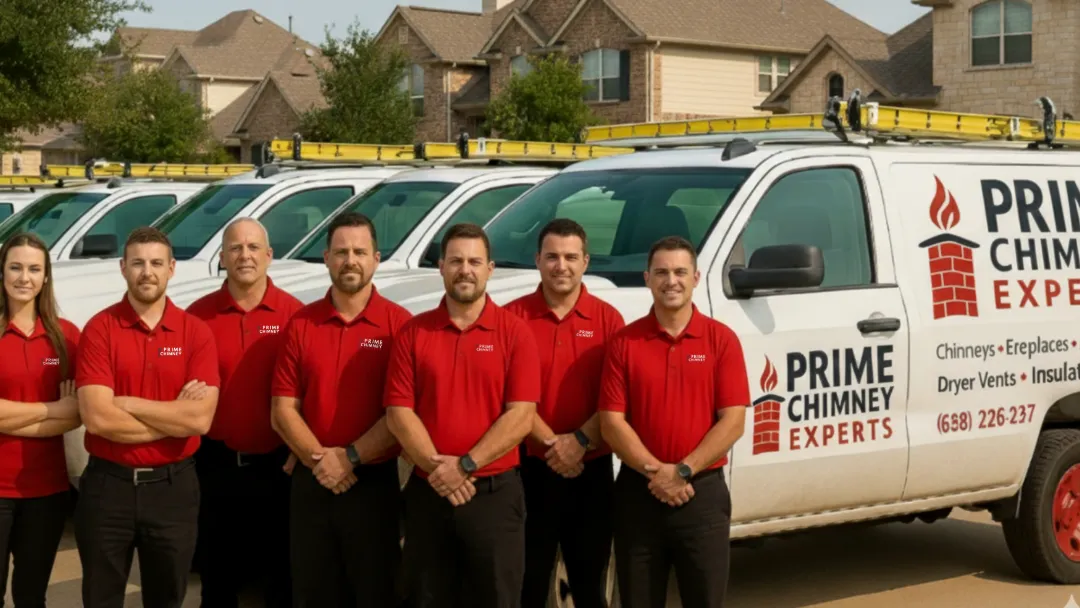
Family-owned, CSIA-certified, NFPA 211–compliant. We're the team you call when you want it done right the first time — no rotating subcontractors, no upsell pressure, no surprises. Same techs, same trucks, same standard.
The NFPA recommends an annual chimney inspection (Level 1), with sweeping done when buildup reaches 1/8" of creosote. For active wood-burning fireplaces, that's typically once per heating season.
Our chimney inspectors hold current CSIA (Chimney Safety Institute of America) certifications, verifiable via the CSIA member directory at csia.org. We also have NFI specialists for fireplace installations.
Yes — emergency response is available 24/7 (subject to crew availability) for active water leaks, animal trapped in flue, post-fire damage, and storm damage. Same-day in most cases.
Always. We provide a written quote before any work begins, with photos of the issues we found. Final pricing depends on chimney condition and any additional work identified during inspection.
Prime Program is our annual maintenance program at $19.99/month ($240/year). Includes: annual Level 1 inspection and sweep ($248 value), priority scheduling, 10% off all repairs, and emergency response priority. Cancel anytime, no contract.
Last reviewed:
Other services in the Pellet Stoves category.
Free written quote. Same-week scheduling. 24/7 emergency response when you need it.
Active leak, animal in flue, post-fire damage, or smoke event? Real humans on the line 7 AM to 12 AM every day — replies in under 2 minutes. Tech dispatch within 2 hours during business hours, subject to crew availability after-hours.
Emergency line