
Electric Fireplace Repair
Heater, blower, remote, and flame-effect repair.
Learn morePilot won't light, flame won't stay on, no heat, gas smell — full gas fireplace diagnostic and repair. Thermocouples, thermopiles, valves, igniters, log-set repositioning, and burner cleaning.
Prices shown are starting estimates and may change with the condition, access, and scope we find on site. Only a written quote from an on-site visit is a price we commit to.
When a gas fireplace stops behaving, the homeowner almost never knows whether the fault is the pilot, the valve, the burner, or the flue — and that uncertainty is exactly what this service exists to resolve. Prime Chimney Experts treats gas-fireplace repair as a structured diagnosis across the entire appliance, not a guess at one part. We arrive without a predetermined answer, meter the system end to end, and isolate the actual failure before we quote a single component. We are a national brand, and the standard we hold in one metro is the standard we hold in all of them.
How this differs from the component-specific services: pilot-assembly-replacement, fireplace-gas-valve-repair, and fireplace-gas-burner-installation all begin once the failed part is already known — you book them because a tech (or a prior visit) has named the culprit. This page is the step before that. It's the entry point when the symptom is just 'it won't work,' and the value is the diagnosis itself — figuring out which of those services you actually need, so you don't pay to swap a healthy part.
The diagnosis follows the flame's own logic. We start at the proving circuit, metering thermocouple and thermopile under load against the rating plate, because a unit that lights and dies is failing there far more often than at the valve. If the proving circuit reads healthy we move outward — manifold pressure on the manometer, orifice and air-shutter condition, flame-sense and ignition-module behavior on IPI units, and the draft on direct-vent and vent-free systems. Each test rules a subsystem in or out, so by the time we name the part, we've earned the conclusion rather than assumed it.
Safety is verified across the whole appliance on the way through, not bolted on at the end. We run an ambient CO check during operation, confirm the ODS pilot trips on vent-free units, leak-test the appliance shutoff and flex connector with a manometer drop and bubble soap, and confirm the sealed glass front holds its draft. Because we're testing the entire gas train rather than one part, a second hidden fault — a recirculating flue behind a sooting burner, say — gets caught here instead of stranding you on a follow-up call.
From this single diagnostic visit, the repair can land anywhere: a thermocouple or full pilot assembly, a valve serviced or replaced, a burner re-bedded, an IPI module swapped, a blower or snap-disc, or an orifice conversion. We carry the instruments the diagnosis actually requires — manometer, CO analyzer, millivolt meter — and where the fix is a defined component job, it simply becomes one of the specific services rather than a different visit. The point of this page is that we find which one.
Whether your fireplace is a builder-grade direct-vent insert or a high-end linear ribbon-burner centerpiece, the discipline is the same: diagnose first, document the readings, and tell you plainly what failed and why. Premium service isn't replacing parts until the symptom goes away — it's a correct diagnosis that fixes the cause on the first trip.
At Prime Chimney Experts, a gas fireplace repair is never guesswork. We scope every job from a graded, photographed inspection first — the NFPA 211 level the evidence calls for — so the work is matched to what your flue and masonry actually need, with the report to prove it. The documented inspection is the record the gas fireplace repair is built on.
Chimney inspectionA gas fireplace repair isn't a matter of opinion — it's held to published national standards. Prime Chimney builds every job to the named codes below and documents it, so the work is provably right for an inspector, an insurer, or a future buyer. These are the universal standards; your city's permit and inspection requirements are confirmed with the local authority before we pull the job.
Gas-train work follows the NFPA 54 (National Fuel Gas Code): a sediment trap ahead of the appliance shutoff, an approved flex connector, and a manometer pressure/leak test before the unit returns to service.
Manifold pressure is metered and set to the appliance rating plate (roughly 3.5" WC for natural gas, 10-11" WC for LP) so the burner runs clean instead of sooting.
On a vent-free unit the oxygen-depletion-sensor (ODS) pilot is verified — the safety device that shuts the burner off if room oxygen drops.
An ambient carbon-monoxide check is run during operation and the appliance shutoff and connector are leak-tested before the remote is handed back.
Codes cited are the established national standards (NFPA, UL, IRC) that govern this service. The adopted code edition, permit, and inspection requirements vary by city —Prime Chimney verifies them with your local authority having jurisdiction on every job.
Test gas pressure, ignition, and safety components.
Isolate which part failed; check for CO/leaks.
Fix the identified component with rated parts.
Confirm safe ignition, flame, and venting.
We've worked on 1,000+ DFW homes over 10+ years. Every job — small sweep or full rebuild — runs the same way: certified technicians, written quotes, photo reports, warranty in writing.
Whole-system diagnosis — not a parts guess
Finds which component actually failed
Instrument-led: manometer, CO analyzer, millivolt meter
Honest diagnosis and clear quotes
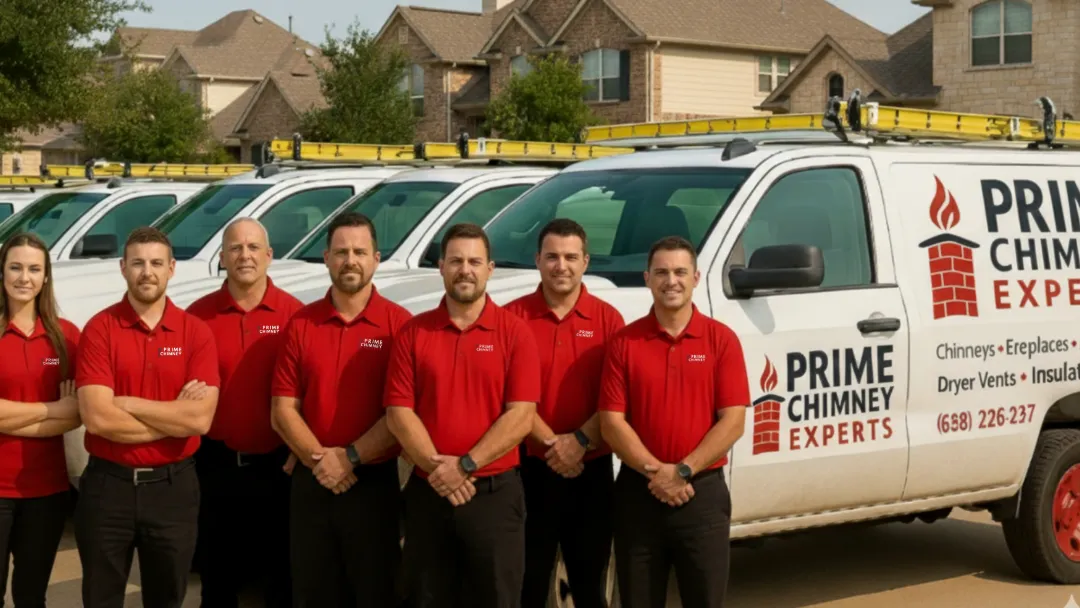
Family-owned, CSIA-certified, NFPA 211–compliant. We're the team you call when you want it done right the first time — no rotating subcontractors, no upsell pressure, no surprises. Same techs, same trucks, same standard.
The NFPA recommends an annual chimney inspection (Level 1), with sweeping done when buildup reaches 1/8" of creosote. For active wood-burning fireplaces, that's typically once per heating season.
Our chimney inspectors hold current CSIA (Chimney Safety Institute of America) certifications, verifiable via the CSIA member directory at csia.org. We also have NFI specialists for fireplace installations.
Yes — emergency response is available 24/7 (subject to crew availability) for active water leaks, animal trapped in flue, post-fire damage, and storm damage. Same-day in most cases.
Always. We provide a written quote before any work begins, with photos of the issues we found. Final pricing depends on chimney condition and any additional work identified during inspection.
Prime Program is our annual maintenance program at $19.99/month ($240/year). Includes: annual Level 1 inspection and sweep ($248 value), priority scheduling, 10% off all repairs, and emergency response priority. Cancel anytime, no contract.
Last reviewed:
Other services in the Gas & Fireplace category.
Free written quote. Same-week scheduling. 24/7 emergency response when you need it.
Active leak, animal in flue, post-fire damage, or smoke event? Real humans on the line 7 AM to 12 AM every day — replies in under 2 minutes. Tech dispatch within 2 hours during business hours, subject to crew availability after-hours.
Emergency line