
Electric Fireplace Repair
Heater, blower, remote, and flame-effect repair.
Learn moreCracked firebrick, eroded refractory mortar, or failed firebox liner repaired with code-spec materials. Critical for fire safety — cracks let heat reach combustible framing.
Prices shown are starting estimates and may change with the condition, access, and scope we find on site. Only a written quote from an on-site visit is a price we commit to.
A masonry wood-burning fireplace is the heart of an older home and, often, its most neglected system. Heat cycling cracks firebrick, weather rusts the lintel and damper, and decades of fires erode the very joints that keep the fire where it belongs. Prime Chimney Experts restores wood-burning fireplaces the way a craftsman approaches restoration work — preserving what's sound, rebuilding what's failed, and bringing the whole assembly back to a standard you can light without a second thought. As a national premium brand, we treat a 1920s firebox in any metro with the same care we'd give a heritage home.
The firebox is where most repairs begin, because it takes the most punishment. We inspect the refractory mortar joints for the hairline failures that always start the decline — anything wider than 1/16" fails safety code — and re-butter them with high-temperature mortar. We cut out and reset cracked firebrick splits individually rather than facing over them, relay an eroded inner-hearth floor, and on factory-built fireboxes we swap cracked molded refractory back and side panels for manufacturer-matched parts. A firebox repaired to spec doesn't just look better; it controls the burn and protects the surrounding masonry from a fire it was never meant to touch.
Above the firebox, the throat and damper are the second failure zone. A throat damper that won't seat leaks heat all winter and won't close out drafts; we free, reseat, or replace the cast-iron plate and frame, repair the deteriorated throat masonry that seats it, and where the original is beyond saving we convert to a top-mounted energy damper that seals airtight at the cap. We replace rusted lintels — the steel angle that spans the opening — and repair the stair-step cracking that rust-jacking causes, because a sagging lintel is a structural problem hiding behind a decorative face.
Restoration is also about the details that make a fireplace usable and handsome again. We re-bed ash-dump doors flush in the firebrick, build or correct hearth extensions to the 16"/20" front and 8" side projection code requires, install smoke guards to cure roll-out on oversized openings, fit custom tempered-glass doors to cut heat loss, and reset corbel courses where the firebox transitions into the flue. Soot-stained brick gets a proper TSP wash-down, and we stage every job with drop-cloth runners and HEPA containment so the restoration doesn't redecorate your living room in gray.
Before we call any wood-burning fireplace ready, we verify it draws. We run a smoke-puffer draft test to confirm the flue pulls and to find any smoke-chamber leakage, because the finest firebox in the world is worthless if the fireplace spills into the room. If the system has venting or liner faults that fall into our chimney-structure work, we flag them honestly rather than hand back a firebox that looks restored but won't burn safely.
This is patient, skilled work, and we don't rush it or hide it. We show you what we found, explain what's structural versus cosmetic, and rebuild to the standard that lets a real wood fire be the centerpiece it was built to be. Premium restoration means the next person to own your home inherits a fireplace that was done right.
At Prime Chimney Experts, a fireplace masonry repair is never guesswork. We scope every job from a graded, photographed inspection first — the NFPA 211 level the evidence calls for — so the work is matched to what your flue and masonry actually need, with the report to prove it. The documented inspection is the record the fireplace masonry repair is built on.
Chimney inspectionA fireplace masonry repair isn't a matter of opinion — it's held to published national standards. Prime Chimney builds every job to the named codes below and documents it, so the work is provably right for an inspector, an insurer, or a future buyer. These are the universal standards; your city's permit and inspection requirements are confirmed with the local authority before we pull the job.
Refractory mortar joints with cracks wider than 1/16 inch are at the NFPA 211 repair threshold — that gap exposes the combustible framing behind the firebox and must be re-buttered with high-temperature mortar.
Cracked firebrick splits are cut out and reset with heat-rated refractory mortar; standard gray mortar fails under firebox heat and is not code-acceptable here.
The hearth extension is built or corrected to the code projection — 16 in front / 8 in side for openings under 6 sq ft, 20 in front / 12 in side for 6 sq ft or larger.
A smoke/draft test confirms the restored firebox and flue actually draw before the fireplace is called ready — a sound firebox that won't draft isn't safe to burn.
Codes cited are the established national standards (NFPA, UL, IRC) that govern this service. The adopted code edition, permit, and inspection requirements vary by city —Prime Chimney verifies them with your local authority having jurisdiction on every job.
Map cracked brick and failed joints.
Cut out damaged firebrick to sound material.
Set new firebrick in refractory mortar.
Proper cure guidance before first burn.
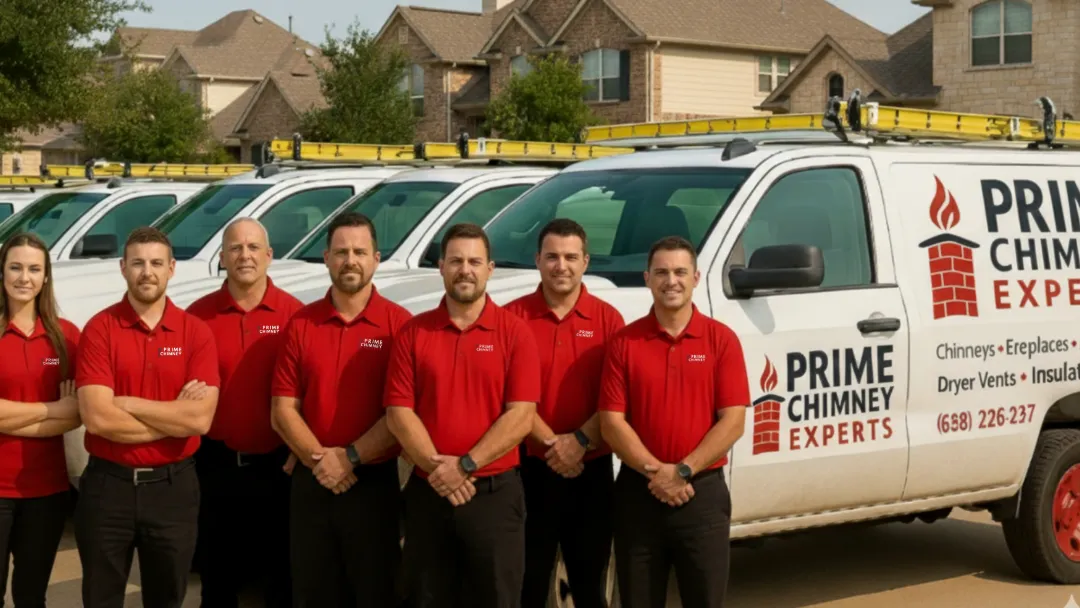
We've worked on 1,000+ DFW homes over 10+ years. Every job — small sweep or full rebuild — runs the same way: certified technicians, written quotes, photo reports, warranty in writing.
Code-grade firebrick + refractory mortar
Protects the framing behind the firebox
Restores a safe, sealed burn chamber
Photo documentation of repairs
Family-owned, CSIA-certified, NFPA 211–compliant. We're the team you call when you want it done right the first time — no rotating subcontractors, no upsell pressure, no surprises. Same techs, same trucks, same standard.
The NFPA recommends an annual chimney inspection (Level 1), with sweeping done when buildup reaches 1/8" of creosote. For active wood-burning fireplaces, that's typically once per heating season.
Our chimney inspectors hold current CSIA (Chimney Safety Institute of America) certifications, verifiable via the CSIA member directory at csia.org. We also have NFI specialists for fireplace installations.
Yes — emergency response is available 24/7 (subject to crew availability) for active water leaks, animal trapped in flue, post-fire damage, and storm damage. Same-day in most cases.
Always. We provide a written quote before any work begins, with photos of the issues we found. Final pricing depends on chimney condition and any additional work identified during inspection.
Prime Program is our annual maintenance program at $19.99/month ($240/year). Includes: annual Level 1 inspection and sweep ($248 value), priority scheduling, 10% off all repairs, and emergency response priority. Cancel anytime, no contract.
Last reviewed:
Other services in the Gas & Fireplace category.
Free written quote. Same-week scheduling. 24/7 emergency response when you need it.
Active leak, animal in flue, post-fire damage, or smoke event? Real humans on the line 7 AM to 12 AM every day — replies in under 2 minutes. Tech dispatch within 2 hours during business hours, subject to crew availability after-hours.
Emergency line