
Chimney Cap
Is Your Chimney Missing a Cap? Expert install + maintenance.
Learn moreB-vent, direct-vent, or Class A chimney vent install per UL standards. Includes wall + roof penetrations, termination caps, and code-required clearances.
Prices shown are starting estimates and may change with the condition, access, and scope we find on site. Only a written quote from an on-site visit is a price we commit to.
The vent is the appliance's path to safely carry combustion gases — including carbon monoxide — out of your home. Get the vent type, size, routing, or clearances wrong, and those gases can spill back into the living space instead of leaving it. That's why Prime Chimney Experts treats vent installation as a code-and-safety job from the first measurement: there is no premium version of a vent that doesn't get the gases out, and we won't cut a corner on the one system whose failure mode is carbon-monoxide exposure.
The right vent is a specification, not a default. A B-vent (natural-draft) appliance, a sealed-combustion direct-vent fireplace, and a Class-A solid-fuel chimney each have different requirements for material, clearance to combustibles, and termination — and the manufacturer's listing for your specific appliance is the controlling document. We match the system to the appliance and the install, sizing it to the heat output and routing it so the gases draft reliably. Choosing the wrong category, or mixing components that aren't listed together, is exactly the mistake that causes spillage down the line.
Routing is where the craftsmanship shows. We run the vent with the correct pitch and support, hold the required clearances to framing and combustibles at every point, negotiate offsets without choking the draft, and terminate at an approved location with the proper cap. Each connection is sealed to spec so the system is gas-tight along its full length, because a vent is only as safe as its weakest joint.
When the install is complete, we prove it: a draft check and a CO-safe operational test confirm the appliance vents the way it's designed to, and we document the work for your inspection and records. That verification is the difference between a vent that was installed and one that's provably safe — and it's the same standard our technicians hold on every gas install across our national network.
At Prime Chimney Experts, a chimney vent installation is never guesswork. We scope every job from a graded, photographed inspection first — the NFPA 211 level the evidence calls for — so the work is matched to what your flue and masonry actually need, with the report to prove it. The documented inspection is the record the chimney vent installation is built on.
Chimney inspectionA chimney vent installation isn't a matter of opinion — it's held to published national standards. Prime Chimney builds every job to the named codes below and documents it, so the work is provably right for an inspector, an insurer, or a future buyer. These are the universal standards; your city's permit and inspection requirements are confirmed with the local authority before we pull the job.
Gas-appliance vents are sized and routed to the NFPA 54 (National Fuel Gas Code) Category I venting tables so combustion products draft out reliably instead of spilling back into the home.
A factory-built Class A solid-fuel chimney uses UL-103HT listed pipe — tested for high-temperature and chimney-fire conditions — installed to its listing.
B-vent, direct-vent, and Class A systems each hold the clearance to combustibles specified in the appliance and pipe listing — the manufacturer's listing is the controlling document, not a generic gap.
The vent terminates at an approved location with the correct cap and required clearances from windows, soffits, and grade, so flue gases discharge safely away from the building.
Codes cited are the established national standards (NFPA, UL, IRC) that govern this service. The adopted code edition, permit, and inspection requirements vary by city —Prime Chimney verifies them with your local authority having jurisdiction on every job.
Determine vent type and route per the appliance manual.
Run vent with correct pitch, clearances, and supports.
Terminate and seal at the approved location.
Verify draft + CO-safe operation, document the install.
We've worked on 1,000+ DFW homes over 10+ years. Every job — small sweep or full rebuild — runs the same way: certified technicians, written quotes, photo reports, warranty in writing.
Direct-vent, B-vent, and class-A expertise
CO-safe, clearance-compliant installs
Matched to your specific appliance
Inspection-ready documentation
Family-owned, CSIA-certified, NFPA 211–compliant. We're the team you call when you want it done right the first time — no rotating subcontractors, no upsell pressure, no surprises. Same techs, same trucks, same standard.
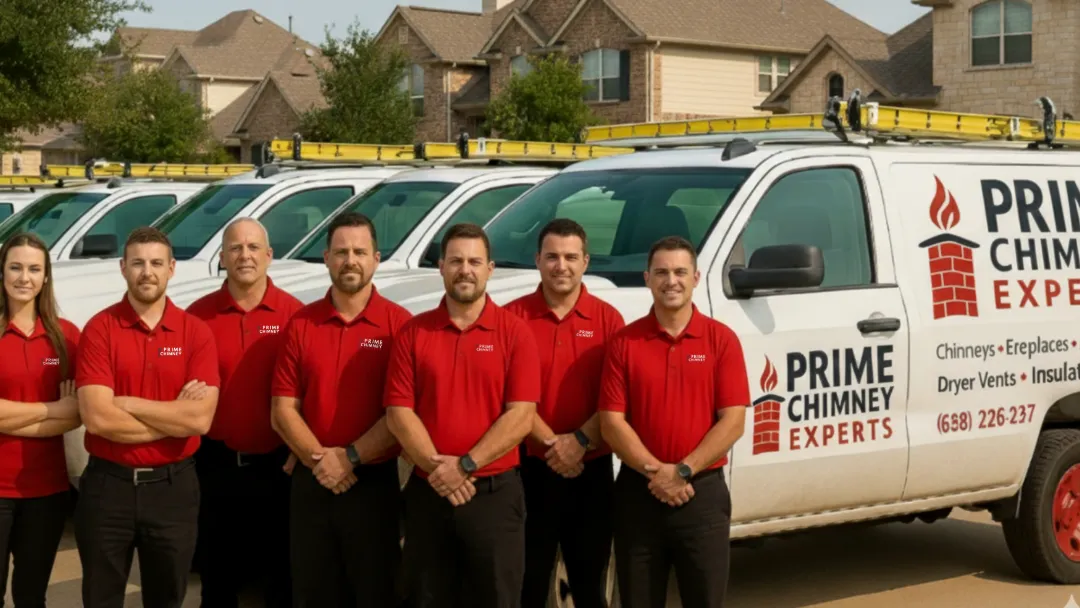
The NFPA recommends an annual chimney inspection (Level 1), with sweeping done when buildup reaches 1/8" of creosote. For active wood-burning fireplaces, that's typically once per heating season.
Our chimney inspectors hold current CSIA (Chimney Safety Institute of America) certifications, verifiable via the CSIA member directory at csia.org. We also have NFI specialists for fireplace installations.
Yes — emergency response is available 24/7 (subject to crew availability) for active water leaks, animal trapped in flue, post-fire damage, and storm damage. Same-day in most cases.
Always. We provide a written quote before any work begins, with photos of the issues we found. Final pricing depends on chimney condition and any additional work identified during inspection.
Prime Program is our annual maintenance program at $19.99/month ($240/year). Includes: annual Level 1 inspection and sweep ($248 value), priority scheduling, 10% off all repairs, and emergency response priority. Cancel anytime, no contract.
Last reviewed:
Other services in the Installation category.
Free written quote. Same-week scheduling. 24/7 emergency response when you need it.
Active leak, animal in flue, post-fire damage, or smoke event? Real humans on the line 7 AM to 12 AM every day — replies in under 2 minutes. Tech dispatch within 2 hours during business hours, subject to crew availability after-hours.
Emergency line