
Chimney Liner
Is Your Chimney Liner Worn or Damaged? Expert install + repairs.
Learn moreWe grind out crumbling mortar between bricks and refill with fresh, color-matched mortar. Restores structural integrity and weather resistance on chimneys 20+ years old.
Prices shown are starting estimates and may change with the condition, access, and scope we find on site. Only a written quote from an on-site visit is a price we commit to.
Tuckpointing is a precise, single-discipline job: the brick on your chimney is sound, but the mortar between it has weathered, recessed, cracked, or washed out, and those open joints are letting water behind the masonry. Prime Chimney Experts restores the joints and nothing more — we grind out the failed mortar to a sound depth, then repack and tool it with mortar matched in color, texture, and strength to the original. How this differs from our masonry-repair service: masonry repair replaces deteriorated brick as well as mortar, while tuckpointing is joints-only — when the brick faces are still solid and it's purely the mortar lines that have failed, repointing is the correct, less-invasive fix and there's no reason to disturb the brick. And unlike a full restoration, which rebuilds crown, cap, flashing, and masonry together, tuckpointing is the focused joint service on its own.
The whole job lives or dies on two details: depth and mortar match. We grind each failed joint out to a sound depth — roughly the joint width or more — so the new mortar bonds to solid masonry instead of bridging a hollow, shallow smear that pops out in a season. Then we match the mortar to the brick's strength rather than reaching for the hardest mix: Type N or Type S selected to the masonry, and soft lime mortar on pre-1930 brick, because a too-rigid portland mortar transfers stress into softer brick and spalls the very faces it sits between. The color and tooling are matched so the repointed joints read as original, not as a gray patch across the stack. Throughout, we run OSHA-compliant silica dust control — HEPA extraction and wet-cutting — so the grinding doesn't fill your home's air with crystalline silica.
Because tuckpointing is joint work, the honest scope question is whether the joints are really all that's failing. We sound the brick faces and check for movement before we commit to repointing-only: if the brick itself is spalling, or a section is loose, bulging, or cracked through, that's masonry repair or restoration territory and we'll say so rather than repoint around damage that's going to keep spreading. When the brick is genuinely sound, tuckpointing is one of the highest-value preventive jobs on a chimney — it closes the water path before freeze-thaw can turn open joints into displaced brick.
The result is a chimney whose joints are watertight and load-bearing again, with new mortar that disappears into the original masonry. We photo-document every repointed joint so you have a record of exactly what was renewed. The same mortar-matching and tooling standard governs the work in every market on our national map, so a repointed joint in one metro is indistinguishable from sound original masonry in any other. Get the joints right while the brick is still good and you've stopped the failure at the cheapest, least-invasive stage there is.
At Prime Chimney Experts, a chimney tuckpointing is never guesswork. We scope every job from a graded, photographed inspection first — the NFPA 211 level the evidence calls for — so the work is matched to what your flue and masonry actually need, with the report to prove it. The documented inspection is the record the chimney tuckpointing is built on.
Chimney inspectionA chimney tuckpointing isn't a matter of opinion — it's held to published national standards. Prime Chimney builds every job to the named codes below and documents it, so the work is provably right for an inspector, an insurer, or a future buyer. These are the universal standards; your city's permit and inspection requirements are confirmed with the local authority before we pull the job.
Repointing uses Type N or Type S mortar matched to the brick's strength — never simply the hardest mix — because a too-rigid mortar spalls the softer brick it's meant to protect.
Each failed joint is ground out to a sound depth, roughly the joint width or more, before repacking, so the new mortar bonds to solid masonry rather than bridging a hollow joint.
Grinding out mortar releases crystalline silica, so the work is done under OSHA-compliant dust control — HEPA extraction and wet-cutting — rather than dry-grinding into the home's air.
Codes cited are the established national standards (NFPA, UL, IRC) that govern this service. The adopted code edition, permit, and inspection requirements vary by city —Prime Chimney verifies them with your local authority having jurisdiction on every job.
Verify the brick is sound and it's genuinely the joints that have failed.
Old mortar removed to a sound depth without nicking the brick.
Strength-matched, color-matched mortar packed and tooled to the original.
Optional breathable repellent over the cured joints to protect them.
We've worked on 1,000+ DFW homes over 10+ years. Every job — small sweep or full rebuild — runs the same way: certified technicians, written quotes, photo reports, warranty in writing.
Joints-only — we don't disturb sound brick to fix the mortar
Mortar matched to your brick's strength, soft lime on historic masonry
Color-matched and tooled so the repointing reads as original
HEPA dust control on every grind, with photos of every repaired joint
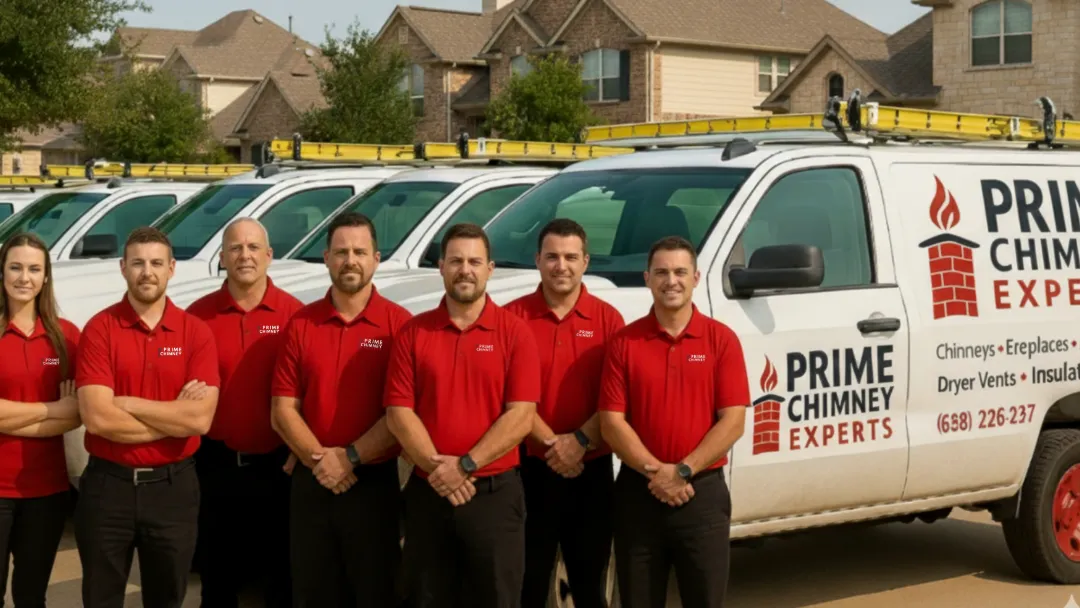
Family-owned, CSIA-certified, NFPA 211–compliant. We're the team you call when you want it done right the first time — no rotating subcontractors, no upsell pressure, no surprises. Same techs, same trucks, same standard.
The NFPA recommends an annual chimney inspection (Level 1), with sweeping done when buildup reaches 1/8" of creosote. For active wood-burning fireplaces, that's typically once per heating season.
Our chimney inspectors hold current CSIA (Chimney Safety Institute of America) certifications, verifiable via the CSIA member directory at csia.org. We also have NFI specialists for fireplace installations.
Yes — emergency response is available 24/7 (subject to crew availability) for active water leaks, animal trapped in flue, post-fire damage, and storm damage. Same-day in most cases.
Always. We provide a written quote before any work begins, with photos of the issues we found. Final pricing depends on chimney condition and any additional work identified during inspection.
Prime Program is our annual maintenance program at $19.99/month ($240/year). Includes: annual Level 1 inspection and sweep ($248 value), priority scheduling, 10% off all repairs, and emergency response priority. Cancel anytime, no contract.
Last reviewed:
Other services in the Repair category.
Free written quote. Same-week scheduling. 24/7 emergency response when you need it.
Active leak, animal in flue, post-fire damage, or smoke event? Real humans on the line 7 AM to 12 AM every day — replies in under 2 minutes. Tech dispatch within 2 hours during business hours, subject to crew availability after-hours.
Emergency line