
Chimney Liner
Is Your Chimney Liner Worn or Damaged? Expert install + repairs.
Learn moreChimney restoration is the comprehensive, whole-stack program for a badly deteriorated chimney — crown rebuild, masonry rebuild, new cap, re-flashing, and full breathable waterproofing addressed together as one coordinated, top-down project by a single Prime Chimney Experts crew. It's the tier you reach when a chimney has failed in several systems at once, not in one spot.
Prices shown are starting estimates and may change with the condition, access, and scope we find on site. Only a written quote from an on-site visit is a price we commit to.
The unified brick shaft from firebox to crown.
Drag the model to rotate — see exactly where this component lives in your chimney.
Restoration is what you do when a chimney has gone past the point where any single fix carries it. The crown is cracked and the brick below it is spalling and the mortar is washing out and the flashing is leaking and the cap is gone — and each of those defects is feeding the others, because the water entering at the top is what's destroying everything beneath. Prime Chimney Experts treats restoration as a single engineered program that closes every water path on the stack in one coordinated project, sequenced top-down so the work doesn't undo itself. How this differs from our masonry-repair service: masonry repair is a targeted fix for a localized problem on an otherwise sound stack, while restoration is the multi-element rebuild of a stack that's failing as a whole — we're not patching a section, we're returning the entire structure to a sound, watertight condition.
The program starts at the top and works down, because that's the order water travels. We rebuild the crown so it slopes, overhangs with a drip edge, and isolates the flue tile from thermal movement; we rebuild or replace spalled and displaced brick courses with units matched to the original and bedded in mortar matched for strength; we re-tuckpoint the joints that are sound enough to keep; and we install a stainless cap and rebuild or replace the flashing at the roofline. Only after the masonry is sound and dry do we flood-coat the entire stack with a breathable vapor-permeable repellent — never before, because sealing a deteriorated chimney traps the damage inside it. Each element is a service we offer on its own; restoration is the case where the chimney needs most of them at once, done in the right order by one crew.
What makes this a restoration rather than a rebuild is that the stack is still standing and structurally locatable — the brick is deteriorated and water-damaged across multiple zones, but it hasn't collapsed, slumped, or gone out of plumb. We renew the whole envelope rather than demolish and re-lay from the footing. Where a Level 2 inspection finds that the deterioration has reached the flue liner, relining folds into the same program so the chimney comes back safe to burn, not just sound to look at. We map the condition zone by zone before we quote, so the scope reflects what the chimney actually needs across every element rather than a guess at the worst-looking face.
The deliverable is a chimney that has been brought back as a system: crown shedding water, brick and joints sound, cap and flashing watertight, the whole stack sealed against the next decade of freeze-thaw, and the work documented element by element with before-and-after photos. The same multi-element discipline and the same finish standard govern the work in every market on our national map, so a restored stack in one metro is built to the identical protocol as one anywhere else. When a chimney has failed in five places, five separate trips by five different trades is how a restoration goes wrong — owning the whole program end to end is how we get it right.
At Prime Chimney Experts, a chimney restoration is never guesswork. We scope every job from a graded, photographed inspection first — the NFPA 211 level the evidence calls for — so the work is matched to what your flue and masonry actually need, with the report to prove it. The documented inspection is the record the chimney restoration is built on.
Chimney inspectionA chimney restoration isn't a matter of opinion — it's held to published national standards. Prime Chimney builds every job to the named codes below and documents it, so the work is provably right for an inspector, an insurer, or a future buyer. These are the universal standards; your city's permit and inspection requirements are confirmed with the local authority before we pull the job.
The rebuilt crown is sloped to shed water, overhangs the brick with a drip edge so runoff is thrown clear of the face, and isolates the flue tile so thermal movement doesn't crack it.
The IRC clearance-to-combustibles air gap — 2 in to framing for an interior masonry chimney, 1 in for an exterior chimney — is preserved through every rebuilt element of the restoration.
Because restoration follows severe multi-element damage, the flue is video-scoped to the NFPA 211 Level 2 standard so a concealed liner breach is found and folded into the program rather than sealed in behind sound-looking masonry.
Whole-stack waterproofing uses a vapor-permeable siloxane/silane repellent applied last over sound, dry masonry — film-forming sealers are excluded because they trap moisture and spall brick in freeze-thaw.
Codes cited are the established national standards (NFPA, UL, IRC) that govern this service. The adopted code edition, permit, and inspection requirements vary by city —Prime Chimney verifies them with your local authority having jurisdiction on every job.
Zone-by-zone inspection of every element — crown, brick, joints, cap, flashing, liner.
Written program scoped top-down so the work closes every water path in order.
Crown, masonry, cap, and flashing restored as one coordinated project.
Breathable waterproofing last, then a water test and full photo record.
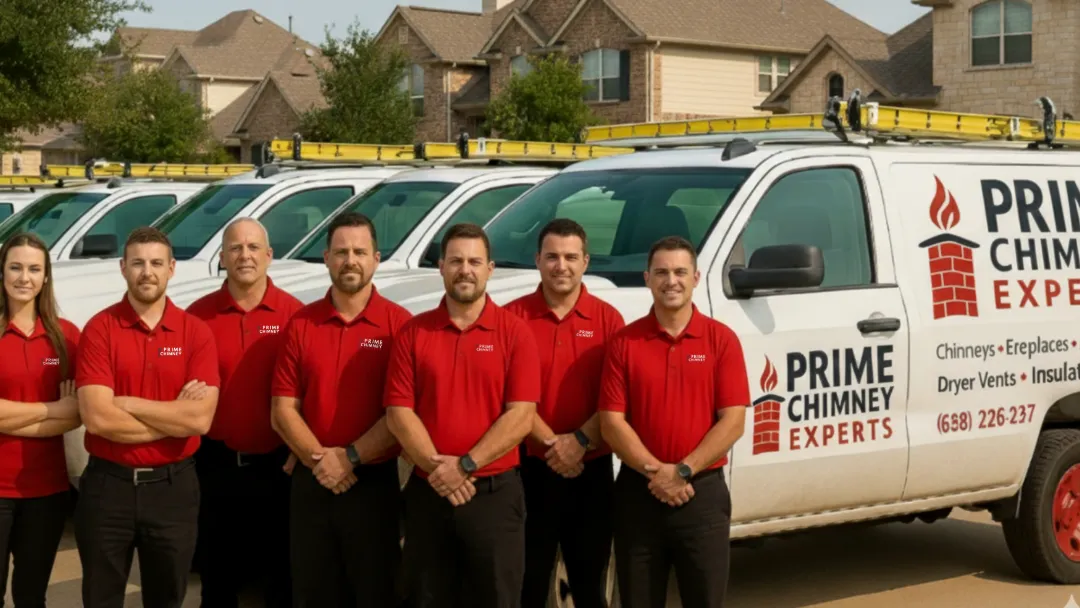
We've worked on 1,000+ DFW homes over 10+ years. Every job — small sweep or full rebuild — runs the same way: certified technicians, written quotes, photo reports, warranty in writing.
One crew owns the whole program — crown, masonry, cap, flashing, waterproofing
Top-down sequencing so each element protects the one below it
Color-matched brick + mortar so the rebuilt stack matches the original
Element-by-element photo documentation across the entire project
Family-owned, CSIA-certified, NFPA 211–compliant. We're the team you call when you want it done right the first time — no rotating subcontractors, no upsell pressure, no surprises. Same techs, same trucks, same standard.
The NFPA recommends an annual chimney inspection (Level 1), with sweeping done when buildup reaches 1/8" of creosote. For active wood-burning fireplaces, that's typically once per heating season.
Our chimney inspectors hold current CSIA (Chimney Safety Institute of America) certifications, verifiable via the CSIA member directory at csia.org. We also have NFI specialists for fireplace installations.
Yes — emergency response is available 24/7 (subject to crew availability) for active water leaks, animal trapped in flue, post-fire damage, and storm damage. Same-day in most cases.
Always. We provide a written quote before any work begins, with photos of the issues we found. Final pricing depends on chimney condition and any additional work identified during inspection.
Prime Program is our annual maintenance program at $19.99/month ($240/year). Includes: annual Level 1 inspection and sweep ($248 value), priority scheduling, 10% off all repairs, and emergency response priority. Cancel anytime, no contract.
Last reviewed:
Other services in the Repair category.
Free written quote. Same-week scheduling. 24/7 emergency response when you need it.
Active leak, animal in flue, post-fire damage, or smoke event? Real humans on the line 7 AM to 12 AM every day — replies in under 2 minutes. Tech dispatch within 2 hours during business hours, subject to crew availability after-hours.
Emergency line