
Chimney Restoration
Whole-stack restoration when a chimney has failed in several systems at once.
Learn moreIs Your Chimney Liner Worn or Damaged? Get your fireplace back in top shape with expert chimney liner installation, repairs, and maintenance from Prime Chimney Experts. Your one-stop chimney solution trusted by homeowners who value reliability, and protection.
Prices shown are starting estimates and may change with the condition, access, and scope we find on site. Only a written quote from an on-site visit is a price we commit to.
Modern UL-listed metal liner — required for gas conversions and damaged flues.
Drag the model to rotate — see exactly where this component lives in your chimney.
Relining begins with a failure that has already happened. A clay-tile liner that has cracked, spalled, lost mortar joints, or breached after a chimney fire is no longer a safety barrier, and a camera scan is what turns 'the brick looks fine' into a documented reline decision. Prime Chimney Experts treats relining as the diagnosed replacement of a liner that exists but has failed — not the cosmetic refresh of a sound one. How this differs from flue installation: there we fit a liner where none ever existed (new construction, an added appliance, an unlined masonry stack); here the channel is already in place and the job is to tear out or abandon the failed liner and replace it full-length.
Because we are replacing a known-bad liner, the first work is grading exactly what failed and choosing the replacement to match. We video-scope the flue to confirm the failure mode — circumferential tile cracks, spalled faces shedding into the firebox, debonded joints, heat-checking from a past flue fire — then size the new liner to the actual clear inside dimension, the appliance outlet, and the chimney height against the NFPA 211 venting tables and the appliance listing. We select the alloy to the fuel: 316Ti stainless for wood, coal, oil, or high-sulfur fuels, the appropriate spec for gas, because the wrong alloy fails as early as the one we are replacing. A reline that swaps a cracked liner for an undersized or wrong-alloy one has solved nothing.
The reline decision also forks on method, and we carry each. A drop-in rigid or flexible stainless liner is the common replacement for a failed tile flue. Where the masonry around the failed liner is itself too compromised to host a drop-in liner, a cast-in-place poured-masonry liner forms a new seamless flue around an inflated former and re-stiffens the chimney in one pour. For a flue that vents a gas appliance and is now oversized after the old liner failed, we downsize the replacement so the gas vents without condensing. For two appliances sharing one stack, the replacement is a common-vent liner sized to the NFPA 54 tables. How this differs from the flexible-liner page: that page is about one replacement material — the corrugated flexible liner for offset flues; this page is the reline decision itself, which may land on flexible, rigid, or cast-in-place depending on what the failed flue and the appliance demand.
When the replacement is in we prove it: a smoke or pressure test confirms the new liner and joints are gas-tight, a draft reading validates the sizing, and we document the UL-1777 listing and NFPA 211 sign-off for your permit, insurer, or post-fire claim — relines after a chimney fire are routinely the insurer's documentation event. That paper trail is the difference between a liner that was swapped and one provably better than what failed. The same scope-grade, alloy-selection, and testing discipline governs every reline across our national network, so a replacement liner installed in any market carries the same engineering and the same proof.
At Prime Chimney Experts, a chimney liner is never guesswork. We scope every job from a graded, photographed inspection first — the NFPA 211 level the evidence calls for — so the work is matched to what your flue and masonry actually need, with the report to prove it. The documented inspection is the record the chimney liner is built on.
Chimney inspectionA chimney liner isn't a matter of opinion — it's held to published national standards. Prime Chimney builds every job to the named codes below and documents it, so the work is provably right for an inspector, an insurer, or a future buyer. These are the universal standards; your city's permit and inspection requirements are confirmed with the local authority before we pull the job.
The replacement liner must be a UL-1777 listed chimney liner — tested and certified for the application — not improvised pipe. We document the listing for your permit, insurer, or post-fire claim.
Stainless alloy is selected to the fuel: 316Ti for wood, coal, oil, or high-sulfur fuels; 304 where the fuel allows. The wrong alloy corrodes as early as the liner being replaced.
The new liner is sized to the actual flue dimension, the appliance outlet, and the chimney height per the NFPA 211 venting tables and the appliance listing — replacing a cracked liner with a mis-sized one fails to vent safely.
Where the relined flue serves two appliances on one stack, the replacement is common-vented to the NFPA 54 (National Fuel Gas Code) sizing tables so neither appliance spills combustion products.
The replacement liner is insulated where required to maintain clearance to combustibles — 2 in for an interior masonry chimney, 1 in for an exterior chimney per the IRC; factory-built chimney per its own listing.
Codes cited are the established national standards (NFPA, UL, IRC) that govern this service. The adopted code edition, permit, and inspection requirements vary by city —Prime Chimney verifies them with your local authority having jurisdiction on every job.
Video-grade the failure mode and confirm the existing liner is past repair.
Size the new liner to BTU + flue length; pick alloy and method (rigid / flexible / cast-in-place).
Pull or abandon the failed liner, run the new one full-length, seal the top plate, insulate where required.
Smoke/pressure test, draft reading, and UL-1777 / insurance documentation.
We've worked on 1,000+ DFW homes over 10+ years. Every job — small sweep or full rebuild — runs the same way: certified technicians, written quotes, photo reports, warranty in writing.
Camera-graded failure report before any reline is quoted
UL-1777 listed stainless — transferable lifetime warranty
Post-chimney-fire reline documentation for your insurer
Rigid, flexible, or cast-in-place — the method the failed flue needs
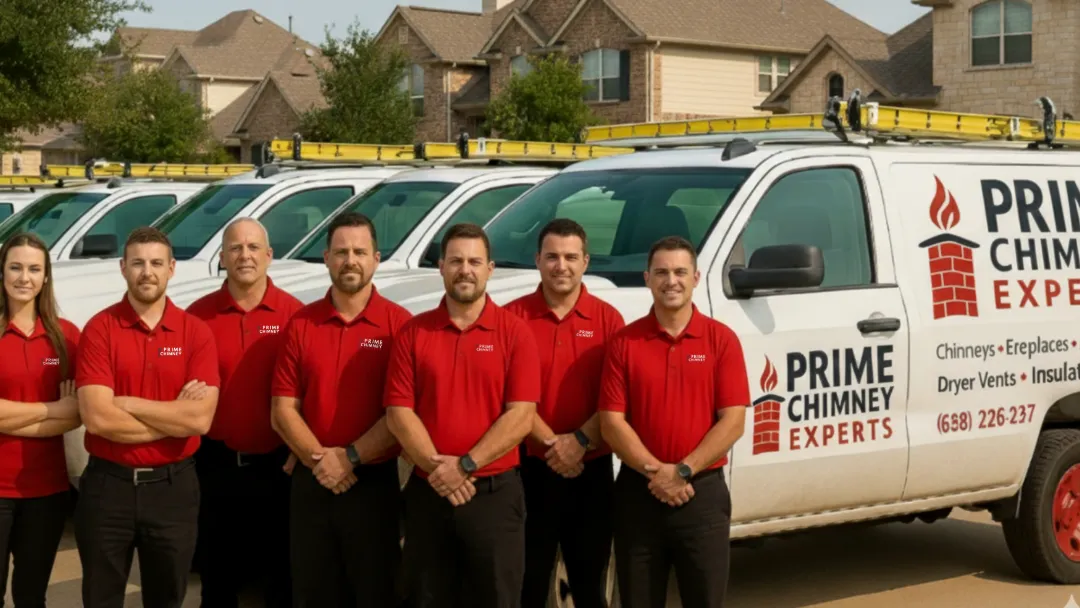
Family-owned, CSIA-certified, NFPA 211–compliant. We're the team you call when you want it done right the first time — no rotating subcontractors, no upsell pressure, no surprises. Same techs, same trucks, same standard.
The NFPA recommends an annual chimney inspection (Level 1), with sweeping done when buildup reaches 1/8" of creosote. For active wood-burning fireplaces, that's typically once per heating season.
Our chimney inspectors hold current CSIA (Chimney Safety Institute of America) certifications, verifiable via the CSIA member directory at csia.org. We also have NFI specialists for fireplace installations.
Yes — emergency response is available 24/7 (subject to crew availability) for active water leaks, animal trapped in flue, post-fire damage, and storm damage. Same-day in most cases.
Always. We provide a written quote before any work begins, with photos of the issues we found. Final pricing depends on chimney condition and any additional work identified during inspection.
Prime Program is our annual maintenance program at $19.99/month ($240/year). Includes: annual Level 1 inspection and sweep ($248 value), priority scheduling, 10% off all repairs, and emergency response priority. Cancel anytime, no contract.
Last reviewed:
Other services in the Repair category.
Free written quote. Same-week scheduling. 24/7 emergency response when you need it.
Active leak, animal in flue, post-fire damage, or smoke event? Real humans on the line 7 AM to 12 AM every day — replies in under 2 minutes. Tech dispatch within 2 hours during business hours, subject to crew availability after-hours.
Emergency line